Taiwanese Tea Ceremony: A Unique Blend of Chinese and Japanese Cultures
Taiwanese tea ceremony began to take shape around the late 1970s, and "tea ceremony" was a new term created by the Taiwanese tea industry. At that time, the tea industry believed that "tea ceremony" was too rigorous and too religious, and was incompatible with the casual and humanistic aspects of Taiwanese tea culture.
To distinguish them, the consensus in Taiwan's tea art community is that "Taiwanese tea art" is easier for the public to understand and accept than "Taiwanese tea ceremony," so most people use this name, which also represents that Taiwanese tea art is the crystallization of the integration of diverse cultures.
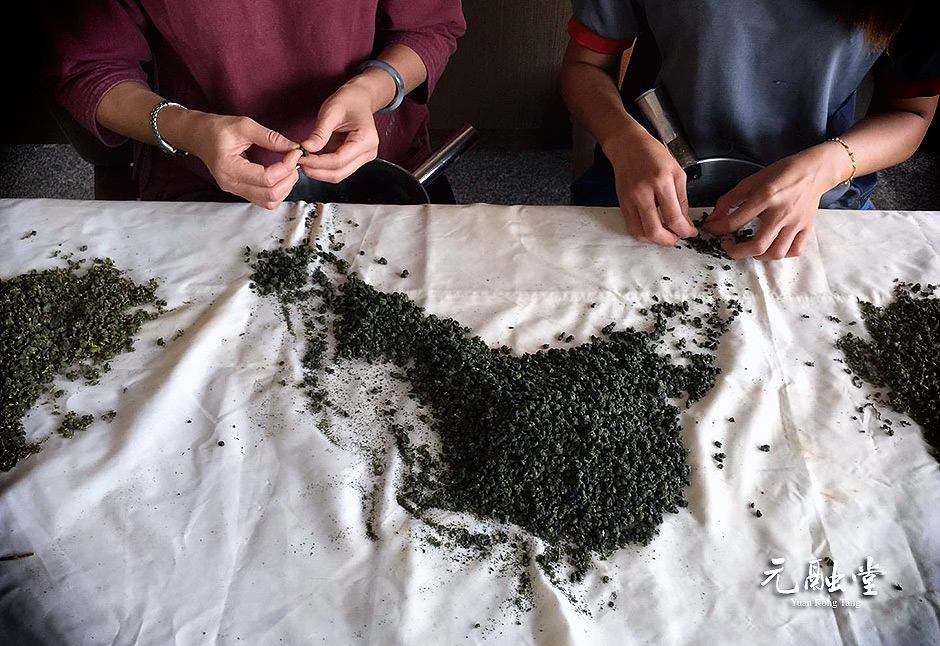
Gongfu Tea
Gongfu tea is a form of tea ceremony that holds a very important place in Taiwanese tea culture. Gongfu tea originated in the Chaoshan region of Guangdong Province. The word "gongfu" has multiple meanings, generally indicating "detailed", "exquisite", "meticulous", "time-consuming", and "energy-consuming".
Because it is quite particular about the selection of ingredients, the production (roasting), the storage, and the brewing methods, it requires very high standards in terms of craftsmanship, teaware, and tasting. It cannot be done without a certain amount of skill, hence the name "Gongfu tea." Taiwan boasts a diverse range of teas with unique flavors, making it very suitable for presentation using the refined art of "Gongfu tea."
Differences between Taiwanese tea ceremony and Chinese and Japanese tea ceremony
Chinese tea ceremony is people-oriented, emphasizing details and the demonstration of tea-brewing techniques.
China is the country where the tea ceremony originated. The Chinese tea ceremony emphasizes "seven virtues and one heart", namely humility, respect, reverence, harmony, courtesy, magnanimity, and tolerance, and stresses spiritual cultivation and moral values.
Lu Yu's "The Classic of Tea" from the Tang Dynasty explicitly states that "tea, in its use, is extremely cold in nature, and is most suitable for those who are refined in conduct and virtuous in their drinking," thus introducing "virtue" into the tea ceremony for the first time. "Refined in conduct and virtuous in their drinking" refers to self-cultivation, willpower training, and character refinement. This elevates tea from a material to a spiritual level, making it the core of the tea ceremony's ethical values.
The tea-brewing skills are demonstrated with respect for the guests in every detail. For example, when brewing tea: the spout of the teapot should not be pointed towards the guests; excess teaware and utensils should be put away under the tea table to appear elegant and composed; when pouring water from the teapot, the water stream should rotate towards one's own body to make it seem non-threatening; when pouring tea, fill the cup to seven-tenths full to prevent spillage when the guests drink; when skimming the tea foam with the cup lid, the lid should not be pointed towards the guests, as this is considered an invitation to leave.
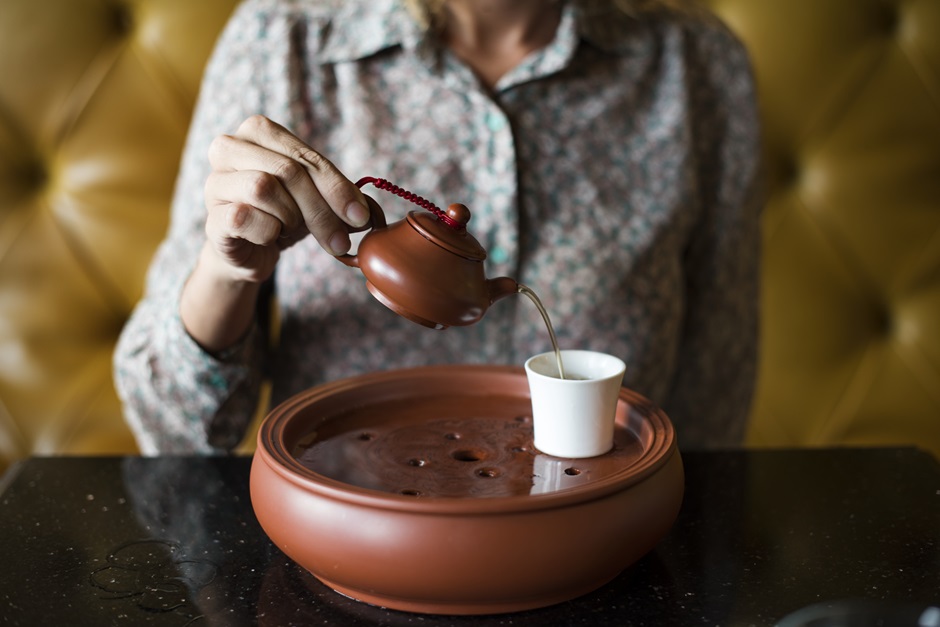
Chinese Tea Ceremony Rules
Chinese tea ceremony emphasizes the "beauty of five realms," which means: when tea leaves unfurl in the tea water in a myriad of shapes, water is the mother of tea; good tea requires good water and proper heat; when the water starts to bubble but has not yet truly boiled, it is the best time to add tea leaves; good teaware enhances the aroma and color, and can also be appreciated; public and private settings may differ, but they must all make people feel comfortable and at ease. These are all aspects of the "beauty of five realms" emphasized in Chinese tea ceremony.
Japan places great emphasis on tea ceremony etiquette, elevating this leisure activity to a spiritual and conscious level.
Japanese tea ceremony places great emphasis on the "Four Rules" and "Seven Principles." The "Four Rules" here refer to "Harmony, Respect, Purity, and Tranquility." The "Harmony" and "Respect" mentioned here refer to the attitude and etiquette that both the host and the guest should possess, while "Purity" and "Tranquility" refer to the elegance and quiet atmosphere that should be maintained when drinking tea.
In Japanese tea ceremony, the host focuses on preparing tea and sweets, and serves guests according to strict steps and rituals. It is not only about tasting tea, but also about expressing the appreciation for every moment of gathering.
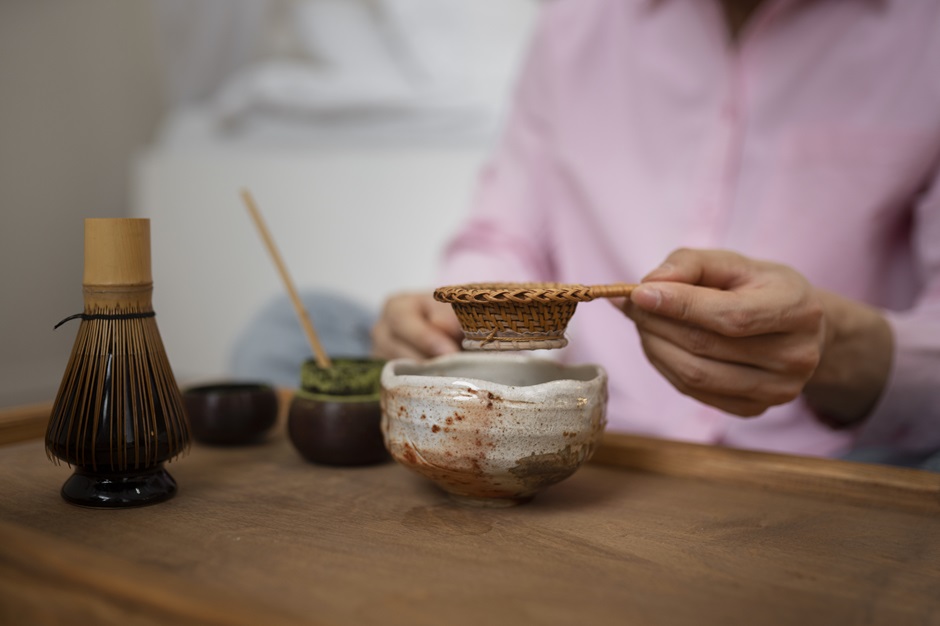
Japanese Tea Ceremony Rules
The various utensils and tools used in the tea ceremony are collectively referred to as "tea ceremony utensils" (ちゃどうぐ), which include the "tea bowl" for drinking tea, the "tea whisk" for stirring the tea when preparing tea, the "tea kettle" or "furnace" for boiling water, the "hand ladle" for taking hot water, the "date" (for thin tea) and "tea caddy" (for thick tea) for holding matcha, the "tea ladle" for taking matcha, and the "fumosa" (cloth) for cleaning tea utensils, etc.
Besides the basic utensils related to tea, there are also "fruit containers" and "washi" for holding tea sweets, fans for ceremonial purposes, and even "kakemono" (calligraphy and painting decorations) hanging on the walls of the tea room and "hanawari" (flower vases) for decorating the tea ceremony. These are all important parts of the tea ceremony utensils, and there are countless items to study in detail!
In general tea ceremonies, "thin tea" is most commonly used, with the host preparing the tea for the main guests (before serving). The preparation of tea includes setting up the tea utensils, placing matcha powder into the tea bowl, using a ladle to scoop hot water from the stove and pour it into the bowl, and then whisking the tea with a tea whisk. After the tea is served, the tea bowls are passed around according to the seating order so that the guests can enjoy the tea.
The core spirit of Taiwanese tea ceremony is the integration of tea with life.
Taiwanese tea ceremony has a relaxed and casual atmosphere, focusing more on "the tea itself," such as the color, aroma, and taste of the tea, as well as the atmosphere created for drinking tea. These are all aspects that Taiwanese tea ceremony values.
In Taiwanese tea ceremony, the atmosphere is more relaxed, and there are fewer rules and regulations. So whether it's brewing tea after a meal or chatting over tea at a friend's house, as long as the process of warming the pot, pouring the tea, and tasting the tea is smooth and unhurried, that's fine. For Taiwanese tea ceremony, the experience of the tea itself is more important.
Between host and guest, it is sufficient to maintain basic etiquette and manners. For example, the speed of brewing tea should match the guest's drinking rhythm, and when serving tea, one should avoid touching the rim of the cup that might come into contact with the guest's mouth. These are the ways of hospitality in Taiwanese tea ceremony. Host and guest should consider and respect each other, creating a natural harmony rather than a deliberately created sense of respect.
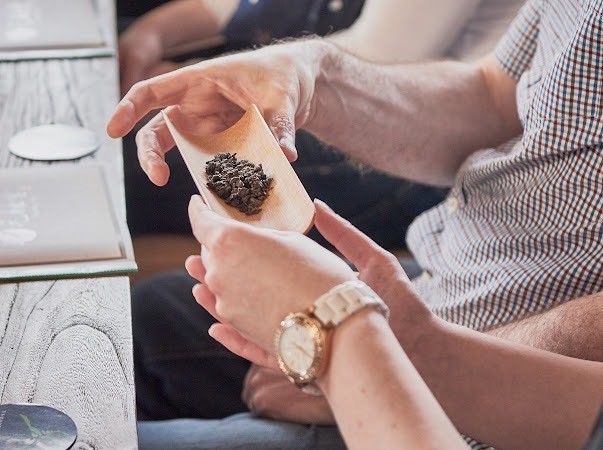
Taiwanese tea ceremony is influenced by Chinese Kung Fu tea. Kung Fu tea has lower requirements for "skills", but each step requires the use of corresponding tea utensils, including teapot, tea tray, tea pitcher, aroma cup, tea tasting cup, etc., with a fine division of labor.
The steps of brewing tea are divided into warming the pot, placing the tea leaves, warming the teapot, warming the cups, moving and drying the pot, pouring the tea, serving the tea, and tasting the tea. Although the overall steps are numerous and time-consuming, they are generally easy for most people to master if completed in sequence.
Although there are no strict rules about clothing or the placement of tea sets, tea drinkers try to wear simple and clean clothing, and the tea sets are arranged in a way that allows for smooth flow. As a result, each tea master has their own style, and each tea master can appreciate their own unique tea culture.