How long can tea be stored? Can it still be consumed after its expiration date? How can I tell if it has spoiled?

Many people ask: "My tea has been sitting at home for a while, and the expiration date on the packaging is almost here."How long can tea be stored??Can I still drink it if it's expired?"Actually, tea leaves don't spoil as easily as fresh milk or other fresh foods, but the storage conditions and the type of tea do affect their flavor and quality."
Instead of just looking at the date, it's better to understand the characteristics of tea and how to judge its quality so that you can drink it with peace of mind.
How long can tea be stored? Different types of tea have different shelf lives.
Generally speaking, unopened tea, if stored properly, can last for approximately [time period missing].2-3 yearsHowever, this is mostly a general range of the "best before" period, and does not mean that it cannot be consumed after the expiration date.
Preservation characteristics of common tea varieties
- Green tea, lightly roasted oolong tea:suggestionWithin 1 yearThe flavor is quite fresh after drinking.
- Medium to heavily fermented or roasted teaThe shelf life is relatively long, approximately1-2 yearsThe flavor remains stable.
- Some mature tea varietiesUnder the right conditions, the flavor can even change over time.
Key points:How long tea can be stored depends not only on "time" but also on "storage conditions." The same tea can have drastically different flavors depending on how well or poorly it is stored.
Can you still drink expired tea?
The term "expired" usually refers to the expiration date indicated on the packaging.Recommended drinking periodTea leaves are naturally dry with low moisture content. As long as they are not damp or moldy, even if they have exceeded the marked date, it does not necessarily mean that they have spoiled.
However, it should be noted that even without obvious spoilage, the following may still occur:
- Aroma evaporates, complexity diminishes
- The flavor becomes milder and the aftertaste diminishes.
- The tea soup doesn't have the same delicate flavor as fresh tea.
suggestion:If the tea is stored properly and remains dry and odorless after opening, even if it is close to or slightly past its expiration date, you can brew a small amount to test it first; if there is an off-flavor or the taste is obviously wrong, it is not recommended to drink it.
How to tell if tea has gone bad? Three quick steps to check.
More important than checking the date is learning to observe and judge. The following three methods can help you determine if tea has spoiled:
1. Smell the aroma: Start by checking if the tea aroma is normal.
Normal tea should have a natural aroma. If the following odors are present, it may have spoiled:
- musty smell
- sour taste
- rancid smell
- A distinct damp smell
If you smell any unusual odor, it is recommended to stop drinking it.
2. Check the appearance: Is it damp, clumped, or has mold spots?
High-quality tea leaves are highly dry and have a dry feel. If the following is observed:
- Tea leaves clumping or sticking together
- Obviously damp
- White or grayish-white mold spots appear on the surface
These are all warning signs that it is no longer advisable to drink this product.
3. Trial brewing: Observe the tea soup and taste it.
Even if the appearance seems normal, if the following occurs after brewing:
- The tea soup may be cloudy or contain abnormal sediment.
- The aroma has clearly disappeared.
- It tastes extremely bitter and unnatural.
This could indicate a decline in quality. It is recommended to brew a small amount first to test for any abnormalities before drinking.
Why does tea easily lose its flavor? Storage method has the biggest impact.
Tea's greatest enemy isAir, humidity, light and high temperatureThese factors accelerate oxidation, causing the tea to lose its aroma or develop off-flavors.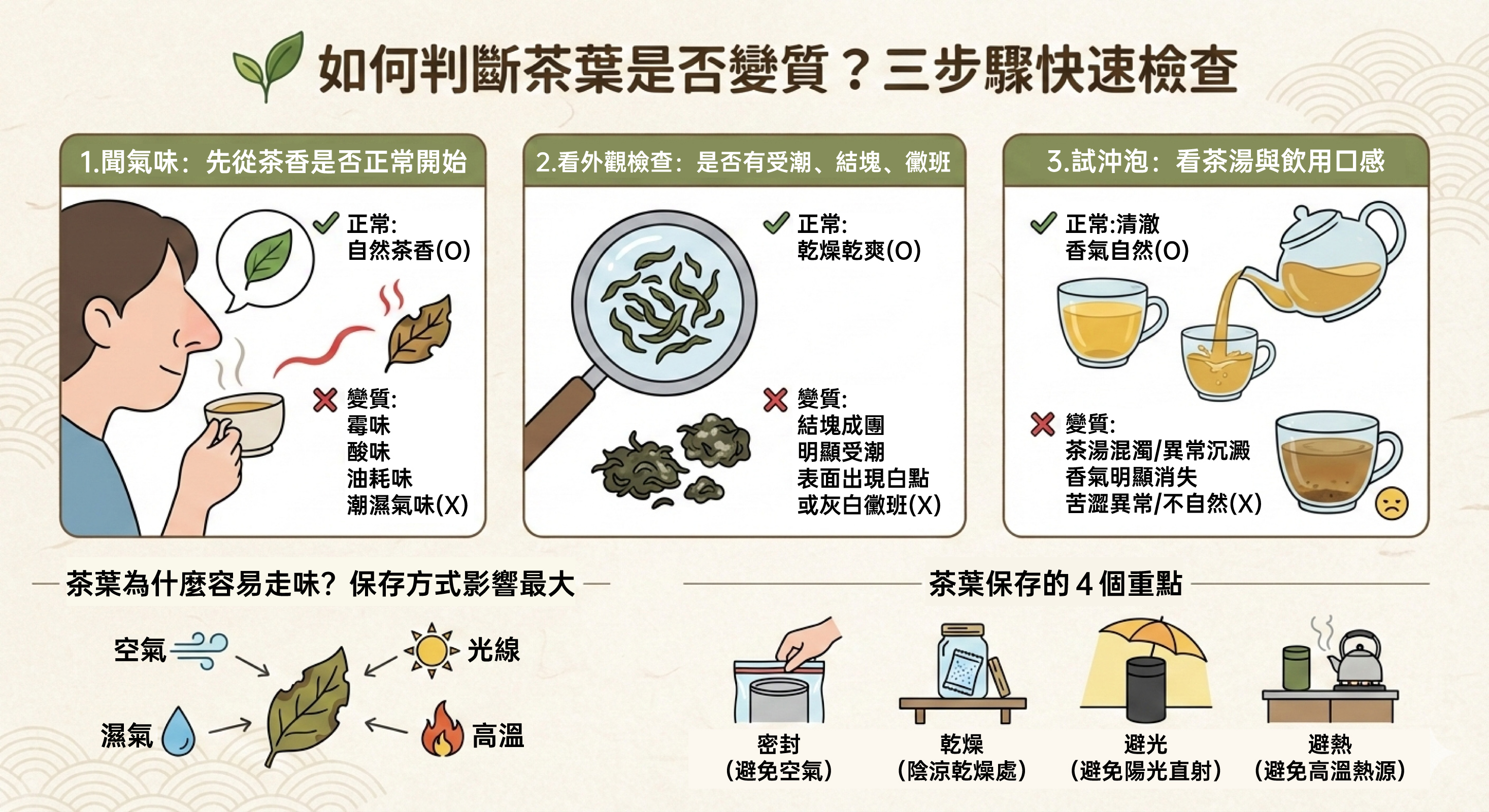
Four key points for tea preservation
- sealUse airtight containers or resealable bags to avoid repeated opening and closing that could allow air to get in.
- dryStore in a cool, dry place, avoiding damp environments.
- Avoid lightAvoid direct sunlight to reduce flavor degradation.
- Avoid heatKeep away from high-temperature heat sources such as stoves and ovens.
If the living environment is humid, moisture-proof measures can be taken to prevent the tea from getting damp and affecting its taste.
Are high-quality teas stored for a longer period of time?
Many people ask, "Are high-quality teas less likely to spoil?"
High-quality tea undergoes more stable drying control and has fewer impurities during the processing, resulting in better flavor stability under normal storage conditions. However, this does not mean it can be stored indefinitely.
The real factors affecting preservation are still the environment and the storage method after opening. Choosing teas with a clear origin, that have passed safety inspections, and that have undergone meticulous processing can reduce the risk of flavor deterioration, but proper storage is still necessary.
In conclusion: Instead of asking if it's drinkable, we should ask if the flavor is still there.
In summary:
- Most teas can be stored if stored properly.2-3 years(Unopened)
- Expired doesn't necessarily mean it's unsafe to drink, but the flavor may have deteriorated.
- The key to judgment isSmell, appearance and taste after brewing
Instead of simply asking "Can I still drink it after it expires?", it's better to consider "Can this cup of tea still present its proper flavor?" When the tea has a delicate aroma, a pure taste, and no off-flavors, that's proof that it's still of good quality.
Drinking tea is not just about quenching thirst, but also about appreciating the land and the tea-making process. Proper storage and timely consumption are essential to showcasing the best flavor of each tea leaf.